




Climate Change
What is the state of our oceans? 6 key findings
7 min

We highlight some of the key findings from the 10th Copernicus Ocean State Report.
From a fast-warming Arctic to island nations on the front line, Europe’s yearly ocean check-up shows how a changing sea affects all of us.
Every year, scientists across Europe give the ocean a health check. The result is the Copernicus Ocean State Report, and its tenth edition (OSR10) came out on 30 September 2026.
In this story, we'll highlight six findings that show how the ocean is changing, and why it matters for people and wildlife.
First, a bit of background. The Copernicus Marine Service, part of the European Union’s Earth observation programme, launched the report in 2015. It combines satellite data, measurements taken at sea and ocean reanalyses, which are model-based reconstructions that blend past observations into one consistent record.
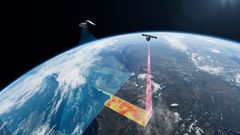
This edition also uses “ocean narratives”. These link ocean indicators, like sea ice or sea-level rise, to social and economic data, so we can see who is affected and where. If you’re curious how satellites track the sea surface, check out our story republished from NASA, El Niño Then and Now.
The Arctic is warming much faster than the rest of the planet. The report finds that the combined temperature of the sea surface and the sea-ice surface rose by about 1 °C per decade between 1982 and 2024. That’s roughly 4.2 °C of warming in just over 40 years.
The fastest warming was in the Kara, Laptev, East Siberian, Barents, Beaufort and Chukchi Seas. Every coastal area of the Arctic Ocean now has more days each year when the water stays above freezing point (−1.8 °C for seawater). Since 1982, that adds up to between 20 and more than 120 extra ice-free days, depending on the area.
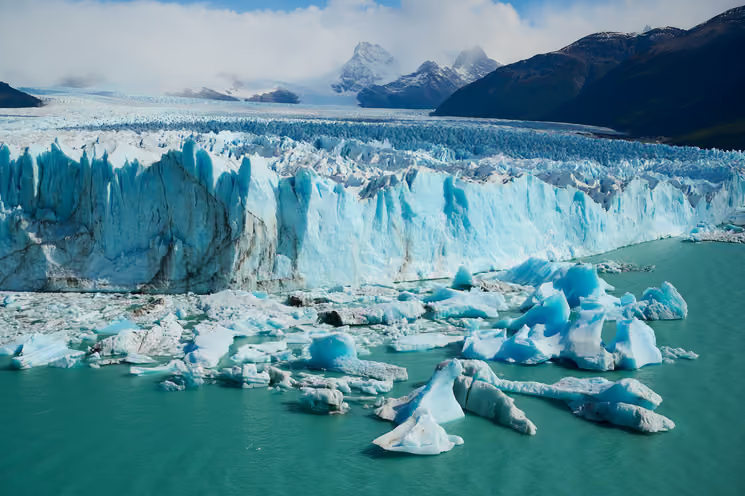
Sea ice is frozen seawater that floats on the ocean surface. It acts like a natural sea wall, shielding the shore from waves.
The report shows that the Arctic coastlines with the most sea-ice loss also have some of the fastest erosion. With less ice, the open-water season lasts longer, and waves have more room to grow before they hit land.
Permafrost, the permanently frozen ground along many Arctic coasts, is thawing too, which leaves the shore soft and easy to wash away.
Together, these changes put homes, roads and Indigenous communities at risk.
At the other end of the planet, Antarctic sea ice has been far below its normal range since a sudden shift in 2016.
The report maps long-term sea-ice retreat in the Southern Ocean against the colonies of Adélie and emperor penguins, and finds they overlap. The habitat these birds depend on is itself disappearing.
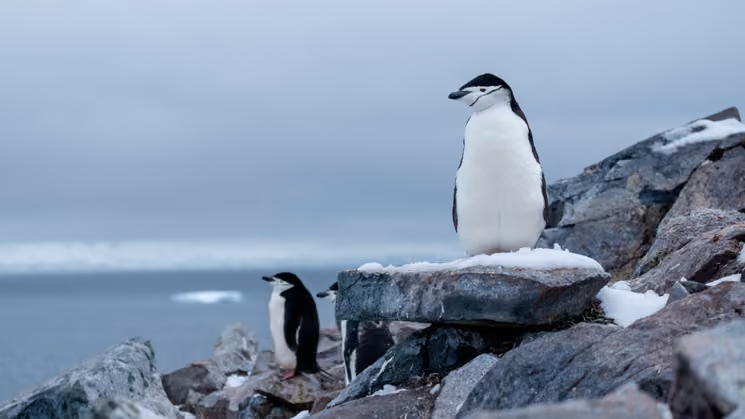
The authors stress that protected areas and fishing rules help, but they can’t save the penguins alone. Cutting the greenhouse gas emissions that drive sea-ice loss matters just as much.
Small Island Developing States (SIDS) are island countries such as Fiji, Barbados and the Maldives. Through their Exclusive Economic Zones (the sea areas each country controls), they cover about 8% of the global ocean. That area includes coral reefs, mangroves and seagrass meadows that matter worldwide.
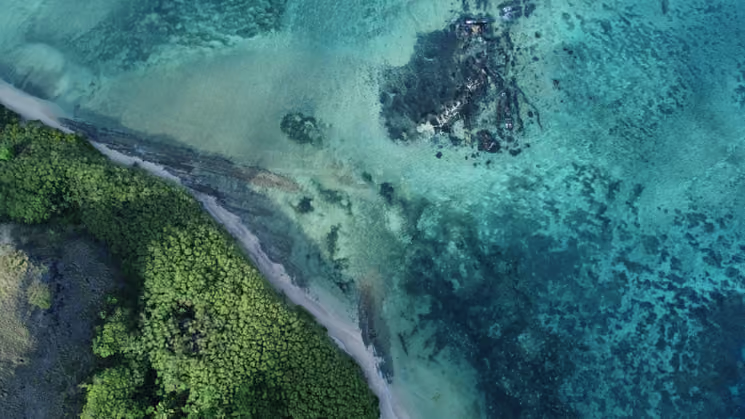 But sea-level rise is accelerating across 65% of these waters. In about 40% of the islands assessed, damage from tropical cyclones has added up to more than half of national GDP. There’s good news too: nature-based coastal defences make a real difference. Mangroves alone prevent more than USD 1 million in storm damage each year in 18 of these countries.
The report includes the 2026 Starfish Barometer, a yearly overview of the ocean’s health.
One of its clearest signals is that sea levels are rising faster. Between 1993 and 2011, global mean sea level rose by about 2.6 mm a year. Between 2012 and 2025, that rate jumped to 4.2 mm a year. The main drivers are warming seawater, which expands, and melting glaciers and ice sheets.
Ocean heat is also hitting coral reefs hard: more than 84% of the world’s reefs have been exposed to heat stress strong enough to cause bleaching.
Marine heatwaves are long spells of unusually warm seawater. They can last for days or months.
In 2024, the Mediterranean had more marine heatwave days than in any year of the past two decades, and the Eastern Mediterranean was hit hardest. The Black Sea also set records. Some events lasted more than 30 days, and in places like the Anatolian coast of Türkiye, temperatures were more than 4.6 °C above normal.
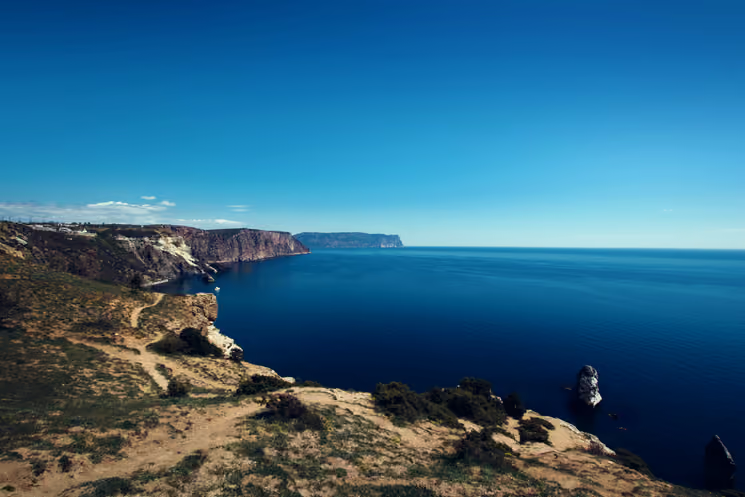 The report also shows that heatwaves don’t stay at the surface. They can reach tens of metres below, where satellites can’t see them, so we need sensors in the water as well as in space.
So now you know: the Arctic is warming fast, shrinking sea ice is speeding up coastal erosion, penguins are losing their habitat, island nations are highly exposed, sea-level rise is accelerating, and Europe’s seas are breaking heat records.
The report’s authors argue that these aren’t separate problems but parts of one connected change. Tracking it takes long-term ocean observation and closer cooperation on climate, biodiversity and ocean policy.
Want to go further? Read the full Ocean State Report, find out what climate overshoot means for our warming planet, or explore our Earth Observation courses to learn how we monitor the planet from space.
This article was partly drafted by AI. It was edited by humans.
Login and start learning!