








Disaster Risk
Anak Krakatau eruption by Sentinel-3
3 min
A recent event brought together participants across sectors and taught them to use play to simulate disaster preparedness.
What if we could prepare for a major flood or a total blackout not through manuals, but through play?
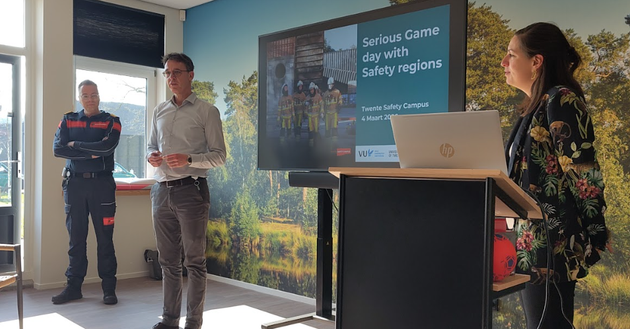
On the 4th March 2026, we explored this question during the Serious Game Day, dedicated to exploring the potential of serious games for safety regions.
The event was hosted by the Twente Safety Campus, which is part of the Twente Safety Region (Veiligheidsregio Twente) - a partnership between emergency services and municipalities - and features a Risk Factory where various training scenarios are conducted. The Risk Factory clearly demonstrated the potential of games for resilience.
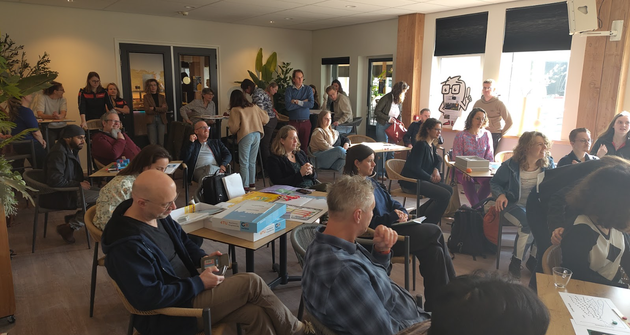
Participants included safety region employees, municipal staff, university staff, students, and corporate employees.
During the "carousel" session, participants were introduced to various games.
The first game was Sinking Island by the Red Cross Climate Centre. The only requirement to play is a large sheet of paper. As well as being a fun bonding exercise, the game offers a vivid simulation of the effects of climate change, forcing players to compete to be the last team standing on an ever-decreasing surface area.
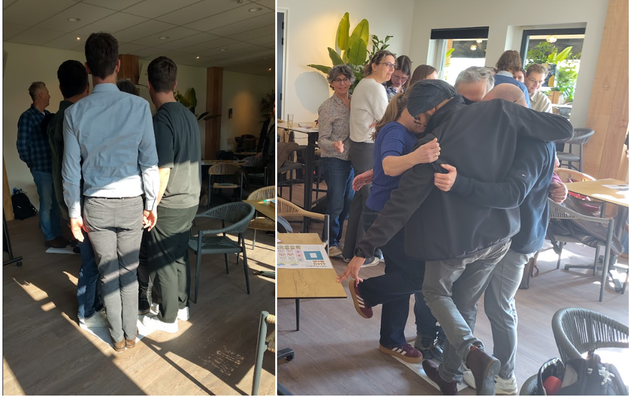
In Sinking Island, which simulates climate change's effects, groups compete to be the last standing on a shrinking surface.
Another game tested was Blackout Battle from Safety Region Noord-Holland Noord. This game provides a realistic depiction of what can happen in the event of a power blackout, and has players compete to see who can best prepare for it.
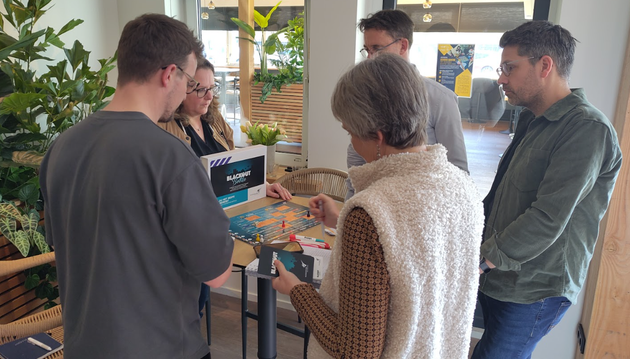
(Above) Participants play Blackout Battle, which involves preparing for a power outage.
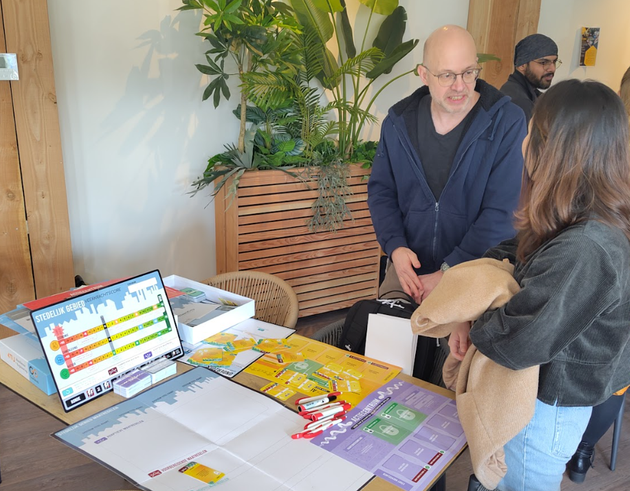
(Above) A participant discusses The EquiCity Game with one of the developers.
Uncertain Waters has players work together to make their communities more resilient to floods. They must navigate several decision-making scenarios and allocate resources carefully in the face of evolving uncertainty
The EquiCity Game from the University of Twente is a digital game where players make decisions within the urban planning process to become aware of the trade-offs involved. Check out our previous story on the EquiCity Game.
Rising Water, Safer Shores, developed by Kidswise at the University of Twente, is a game created by children for children about flooding and climate change adaptation.
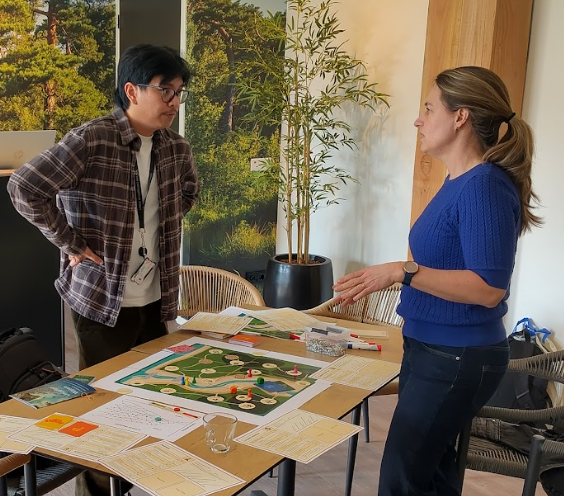
(Above) A participant discusses Uncertain Waters with one of the creators.
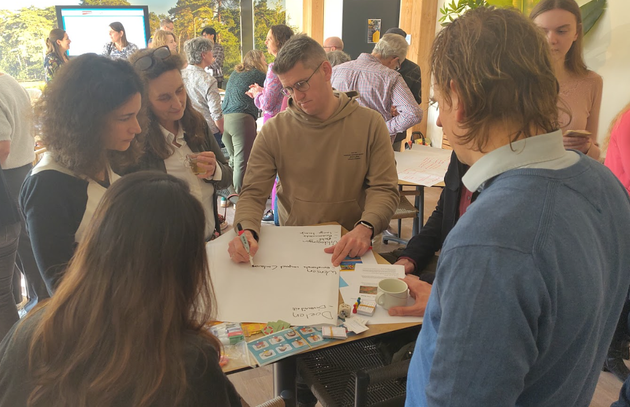
(Above) Participants brainstorm the goals, wishes, and challenges in serious gaming.
Players also had a go at The Resilience Game (Weerbaarheidsspel) from the Twente Safety Campus, an interactive game aimed at 8th-grade students (approx. age 11-12) focused on assembling a 72-hour emergency kit.
Finally, players were introduced to Civil Servants to help them understand decisions during disaster management. Players go through several rounds of negotiation and face the same dilemmas and inequalities that shape real-world disaster governance.
Organiser Eefje Hendriks said, "We are primarily super excited about the Twente Safety campus itself and all the enthusiasm we found around the work we are doing on serious games. There is so much potential to work together!"
Participants identified several steps that could be taken immediately: further developing the Civil Servants game due to its perceived potential; making the Blackout Battle game available nationwide; implementing serious games in children's education; creating an online platform for sharing ideas regarding serious games, and establishing a database of available serious games.
Participants viewed certain collaborations as crucial: partnerships with NGOs for the implementation of serious games, and utilising a Triple Helix model in which universities, businesses, and the government work together.
One of the challenges is developing a game that aligns well with both the objective and the audience. This year, we are working on a systematic overview of various available game typologies to make this connection easier.
In the long term, participants aspire to scale up serious games—which often remain in the prototype phase—for nationwide distribution as commercial games. They would also look to further develop games into digital versions.
Future aspirations also include exploring joint financing and collaborations between safety regions and other partners, with the aim of maintaining them in the long term. Researchers also wish to conduct research into measuring the impact on players' behavioural changes.
Other scenarios worth exploring with games include heat, drought, military conflicts, evacuations, multi-hazard scenarios and long-term resilience (with a focus on the aftermath and recovery phases), as well as targeting specific groups, such as the elderly.
If you would like to stay informed about similar events regarding serious games for crisis management or resilience, please sign up for the mailing list here: serious.gaming.ws@gmail.com.
Login and start learning!