








Urban Infrastructure
What does 'safety' mean in a smart city?
3 min
Recent research explored how a project in India designed to protect women evolved into a broader system of urban surveillance.
Can technology really make cities safer for women, or does it risk creating a world of constant surveillance?
In this episode of the Geoversity podcast, we discuss a recent paper that explores this question through the Bengaluru Safe City Project in India, a large-scale initiative featuring thousands of CCTV cameras, AI-powered facial recognition, drones, body-worn cameras and emergency safety islands.
We explain how ITC researchers Udipta Boro, Fran Meissner and Karin Pfeffer tracked the concept of 'safety' as it evolved through several stages, and how a project originally designed to protect women became a broader system of urban surveillance and management.
Along the way, we explore the risks of algorithmic bias, visual profiling and the assumption that certain appearances signal criminality.
We also question whether surveillance and emergency buttons can deliver meaningful protection without addressing deeper social inequalities and institutional failures.
This episode challenges the idea that technology is neutral. Who defines safety in a smart city, and whose interests does it serve?
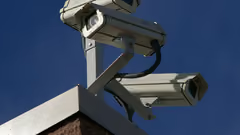
Header image credit: Hustvedt, CC BY-SA 3.0, via Wikimedia Commons
AI partly scripted this episode; it was edited and hosted by humans.
Read the Justice Verma report mentioned in this episode by following this link.
Read the original paper this episode is based on by following the link below:
Login and start learning!