





Disaster Risk
Anak Krakatau eruption by Sentinel-3
3 min
Transcript for the podcast episode Layman's Talk: Chen Song on How Floods Impact Social and Mental Health
What happens after the flood?
Hello, everyone. When people think about floods, they often picture dramatic scenes. Powerful rivers overflowing, houses being washed away, bridges collapsing, and helicopters flying overhead.
These images are unforgettable, but they also hide another story. A much quieter story begins after the flood water disappeared.
Today I would like to tell you that story. In the story of older adults living in Germany's Ahr Valley after the devastating flood of July 2021. It is also the story behind my PhD research at the University of Twente, the Netherlands.
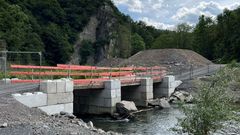
On the night of 14th July 2021, extreme rainfall caused the river to rise rapidly. Within only a few hours, entire villages were flooded. More than 180 people lost their lives, making it one of the deadliest natural hazards in modern German history.
Thousands of homes were destroyed. Roads, bridges, hospitals and care facilities were damaged. The disaster received enormous media attention. People around the world watched the dramatic rescue operation on television, but after several weeks, the cameras left. The rebuilding began. Life seemed to move on.
Yet one important question remained: what happened to the people who survived, especially the older adults?
Europe has one of the oldest populations in the world. Many older adults live independently. Some have chronic illnesses. Some depend on medication every day; others have limited mobility or live alone. When disasters happen, these challenges become much bigger.
However, most disaster research still focuses on physical damage. We count destroyed buildings. We calculate economic losses. We estimate infrastructure costs. All of these are important, but disasters are ultimately about people.
And we know surprisingly little about how older adults continue living months - even years - after a disaster.
That is why I chose this topic.
Over the past two years, I travelled repeatedly to the valley rather than studying the disaster only from reports or satellite images. I wanted to hear directly from the people who experienced it.
Together with my supervisors and research team, we conducted surveys with older adults. We also carried out interviews and group discussions. We spoke with doctors, nurses, volunteers, family caregivers, community organisations, and most importantly, the older residents themselves.
Every conversation reminded me that disasters do not end when the water disappears. For many people, recovery is much longer than anyone expects. One of the strongest messages we heard was about mental health.
Many older adults told us they still could not sleep well. Some became anxious whenever heavy rain was forecast. Others described constantly checking weather reports. Several participants avoided walking near the river even years later. These reactions are understandable. Traumatic experiences do not simply disappear because a house has been repaired.
Our research found that symptoms of anxiety, depression, and post-traumatic stress remained common. Several years after the flood. Mental recovery often took much longer than physical recovery.
One older participant described hearing ringing on the roof all night. Although the weather was completely normal, she immediately became frightened. She thought another flood was coming for her. Rain no longer sounded peaceful. It sounded like danger.
That conversation stayed with me for a long time.
Another important finding was loneliness.
When people think about disasters, they often imagine immediate survival: food, water, shelter, electricity. These are essential, but social connections are also essential.
Many older adults told us that before the flood, they met neighbours every day. They chatted while shopping. They visited friends. They attended community activities. But, after the flood, many neighbours moved away. Some houses remained empty. Some friends passed away. Community centres closed temporarily. Daily routines disappeared.
One participant said something very simple: my house was repaired, but my neighbourhood never came back.
That sentence perfectly captures something statistics alone cannot explain. Disasters damage communities as well as buildings. Rebuilding roles is difficult. Rebuilding trust, friendship, and social networks may be even harder.
Health care was another major challenge. Imagine relying on daily medication. Now imagine your pharmacy is closed. Your doctor has lost your clinic. Roads are blocked. Medication records are unavailable. Medication records are unavailable. Transportation has disappeared. This became a reality for many older adults.
For example, the doctors and nurses told us that they worked under extraordinary pressure. They prescribed medication online. Volunteers helped wherever they could. Family members became informal caregivers. Communities showed incredible solidarity.
Many participants expressed deep gratitude for the support they received. But they also reminded us that emergency response alone is not enough. Recovery requires long-term health care, social care, and emotional support.
Something that surprised me during this research was how often resilience appeared.
When researchers study disasters, we often focus on vulnerability. And vulnerability is certainly real. Older adults do face greater risks, but they also demonstrated remarkable strengths. Some organised neighbourhood support groups. Others helped distribute food. Some simply offered a listening ear to neighbours who were struggling.
Many older adults who had experienced previous hardship during their lives said those experiences helped them cope with the flood. Resilience does not mean people are unaffected. It means they continue moving forward despite enormous challenges. That is an important lesson. People are not only victims, but they are also active participants in recovery.
Conducting this research also changed me personally. As researchers, we often spend a lot of time working with numbers, with computers, we analyse data, we calculate statistics, we prepare figures and tables.
All of these are necessary. But sitting in someone's living room and hearing them describe the worst night of their life is something completely different. Those conversations reminded me that every number represents a real person. Every percentage represents someone's experience; every data point has a human story behind it.
I realised that good disaster research is not only about producing scientific knowledge. It is also about listening carefully, listening respectfully, and making sure those experiences help improve future policies.
Climate change is increasing. Climate change is increasing the likelihood of more frequent and more intense extreme weather events. At the same time, populations across Europe are ageing. These two global trends are happening together. That means understanding the needs of older adults during disasters is becoming increasingly important.
Preparedness cannot focus only on flood barriers and emergency warnings. We also need health care systems that remain accessible, strong local communities, reliable communication, support for caregivers, and recovery plans.
And recovery plans that continue years after the disaster, not only weeks, because recovery is not measured only by how quickly buildings are being reconstructed. Recovery is also measured by whether people regain their sense of safety, health and belonging.
If there is one message I hope people take away from my research, it is this: when the flood waters disappear, the disaster is not necessarily over.
For many older adults, recovery continues every single day, sometimes quietly, sometimes invisibly. If we want communities to become truly resilient, we need to look beyond damaged buildings.
We need to understand the lives of people who live inside them because disasters are ultimately about people, and protecting people means listening to their experiences, listening from them, and making sure no one is forgotten during recovery.
Thank you very much for listening.
Want to hear the podcast version of this article? Check it out here on Geoversity.
You can read Chen Song's PhD thesis here: Impact of the 2021 flood disaster on human social and mental health, focusing on older adults in the Ahr valley in Germany: An empirical study of vulnerability and resilience
Login and start learning!