







Climate Change
Earth from Space: Smoke Plumes from Chile Wildfires
3 min

In this week's edition of Earth from Space, we look at the recent history of one of the world's largest icebergs.
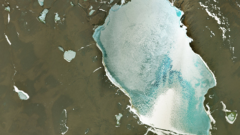
This Copernicus Sentinel-2 image over the South Atlantic Ocean features a close-up view of the A23a iceberg, once the world’s largest. The unusually cloud-free image shows the first signs that the iceberg will soon disintegrate completely.
Click the image below to enlarge and download:

A23a calved from the Filchner-Ronne ice shelf in West Antarctica in 1986. At the time it measured around 4000 sq km – more than three times the size of Rome – making it the largest iceberg in the world.
After being grounded on the ocean floor for decades, in 2020, it lost its grip and began floating in the Weddell Sea until, in November 2023, it started drifting quickly away from Antarctic waters.
Driven by winds and currents, the iceberg travelled about 2000 km further north towards the warmer South Atlantic Ocean waters, reaching South Georgia Island in May 2025, where it started to disintegrate.
Throughout 2025, A23a has been breaking apart into smaller blocks of ice, reducing its size significantly. In this image from 20 December 2025, the iceberg is approximately 150 km northwest of South Georgia, surrounded by numerous icebergs of different sizes.
Although it has lost about three-quarters of its surface area, A23a is still one of the largest icebergs floating in open waters, covering roughly 1000 sq km.
The bright blue areas visible on its surface and on the icebergs to its south are ponds of meltwater, which are clear signs of the iceberg’s rapid demise.
The disintegration is typical of icebergs that reach this far north and is caused by the warmer sea temperatures and weather conditions. As A23a is travelling towards even warmer waters pushed by the currents, it will soon experience a similar fate to other megabergs that have disintegrated in the same waters.
Login and start learning!