




Climate Change
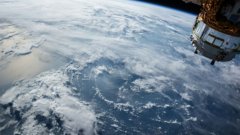
Earth from Space: Smoke Plumes from Chile Wildfires
3 min
Dangers from frozen water - snow, ice or permafrost, are increasing from climate change. This story highlights research into the risks associated with permafrost and how we can model its processes.
Dangers related to frozen water—known as cryospheric hazards—are increasingly common as the world is affected by climate change and global warming.
The hazards posed by snow, ice and permafrost can include avalanches, glacier collapses or flooding from melting ice.
Cryospheric hazards are especially noticeable in the Arctic region, which is warming at least twice as fast as the rest of the globe.
Recent research investigated the processes that affect permafrost.
The focus was two types of cryospheric hazards in permafrost regions:
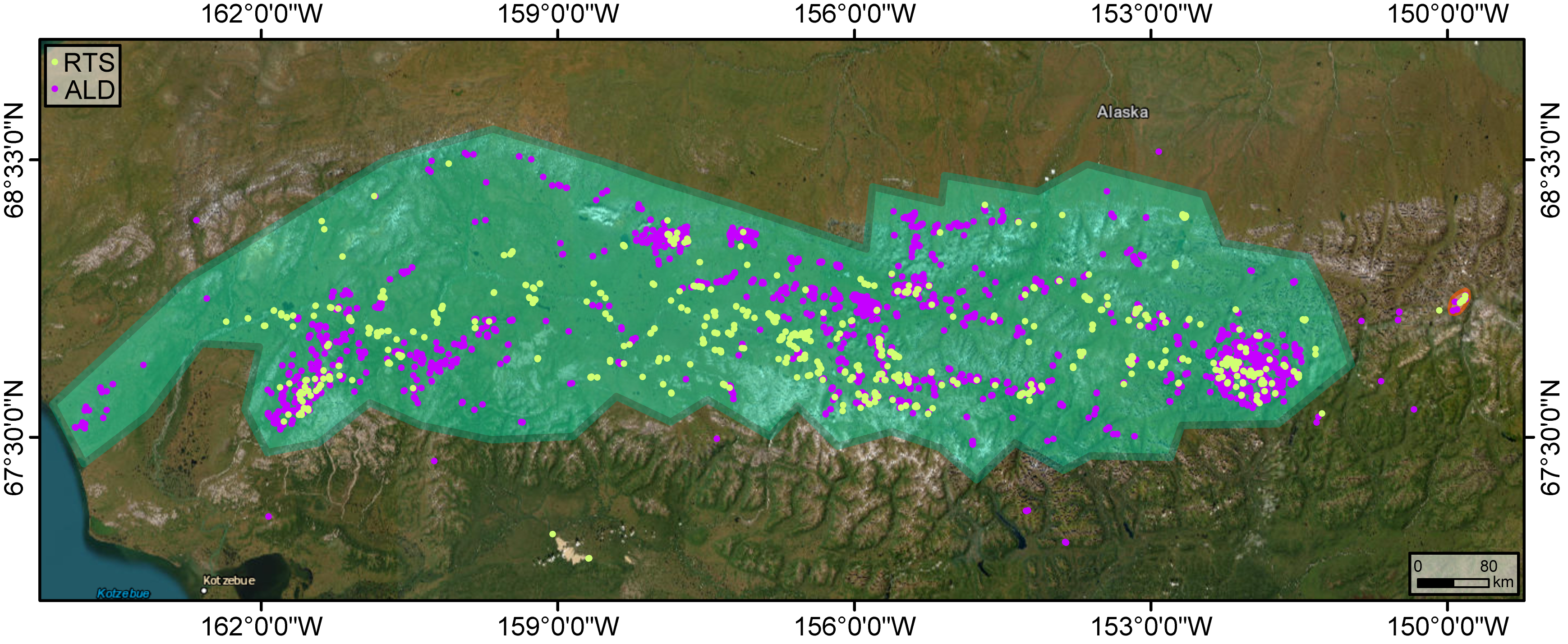
Active layer detachments: rapid mass sliding events associated with the thawing of the uppermost part of the permafrost;
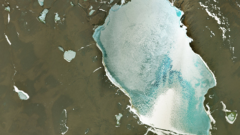
Retrogressive thaw slides: a type of landslide driven by melting ground ice. As the ice-rich permafrost thaws, soil and debris collapse and flow downslope. The process can remain active for several seasons, gradually retreating upslope (retrogressively) as new material slumps from the exposed headwall.
These two processes, although quite different in many ways, share the same basic mechanism.
There are three main types of risk associated with cryospheric hazards.
First, there is a risk to human-made infrastructures such as roads, bridges, dams, and buildings. Thawing permafrost weakens and destabilises the soil, which can lead to cracking, damage, or even the partial or complete failure of the infrastructure.
The second risk concerns an increased sediment budget in rivers or lakes. The sediment budget is the balance between sediment inputs and outputs, and monitoring it is essential for managing coastal erosion, river dynamics, and ecosystem health.
Cryospheric hazards such as active layer detachments and retrogressive thaw slumps can release large amounts of debris and meltwater into nearby water bodies. This sudden input may increase suspended sediments and dissolved solutes, altering vegetation, ground temperatures, snowpack conditions, and the geochemistry of lakes and streams, particularly in areas close to fluvial or coastal systems.
The third risk associated with cryospheric hazards is the release of greenhouse gases by the thawing permafrost. These greenhouse gases are usually trapped within the permafrost. When the permafrost thaws, they are released into the atmosphere, where they contribute to global warming.
In turn, global warming will further increase permafrost thawing, which will release even more greenhouse gases. This phenomenon, called the feedback mechanism, is bound to have a negative effect on society.
Although permafrost landscapes are highly dynamic, the lack of long-term data and limited research attention - especially compared to lower-latitude hazards - means that cryospheric hazards remain poorly understood and difficult to manage.
Research on cryospheric hazards has traditionally focused on monitoring, mapping and describing their occurrence and dynamics, rather than predicting their spatial likelihood.
However, identifying where these hazards are likely to occur through susceptibility modelling can also help researchers to understand the environmental conditions under which they may be triggered.
To this end, the recent research mentioned earlier focuses on developing data-driven spatial predictive models using Generalized Additive Models (GAMs). These are tools that allow researchers to model complex, non-linear relationships in data without having to define the exact form of those relationships in advance.
A GAM is a kind of compromise between traditional statistical models and machine learning: it combines the predictive power of advanced algorithms with the interpretability of linear regression.
In this way, GAMs help not only to predict where cryospheric hazards are likely to occur, but also to understand why.
In this research, GAMs are used as binary classifiers, trained to distinguish between locations where cryospheric hazards are present and where they are absent.
To generate their models' predictive power, the researchers use two types of predictors: geomorphic variables, such as landscape shape or geological features, and climatic variables, such as mean temperature or precipitation.
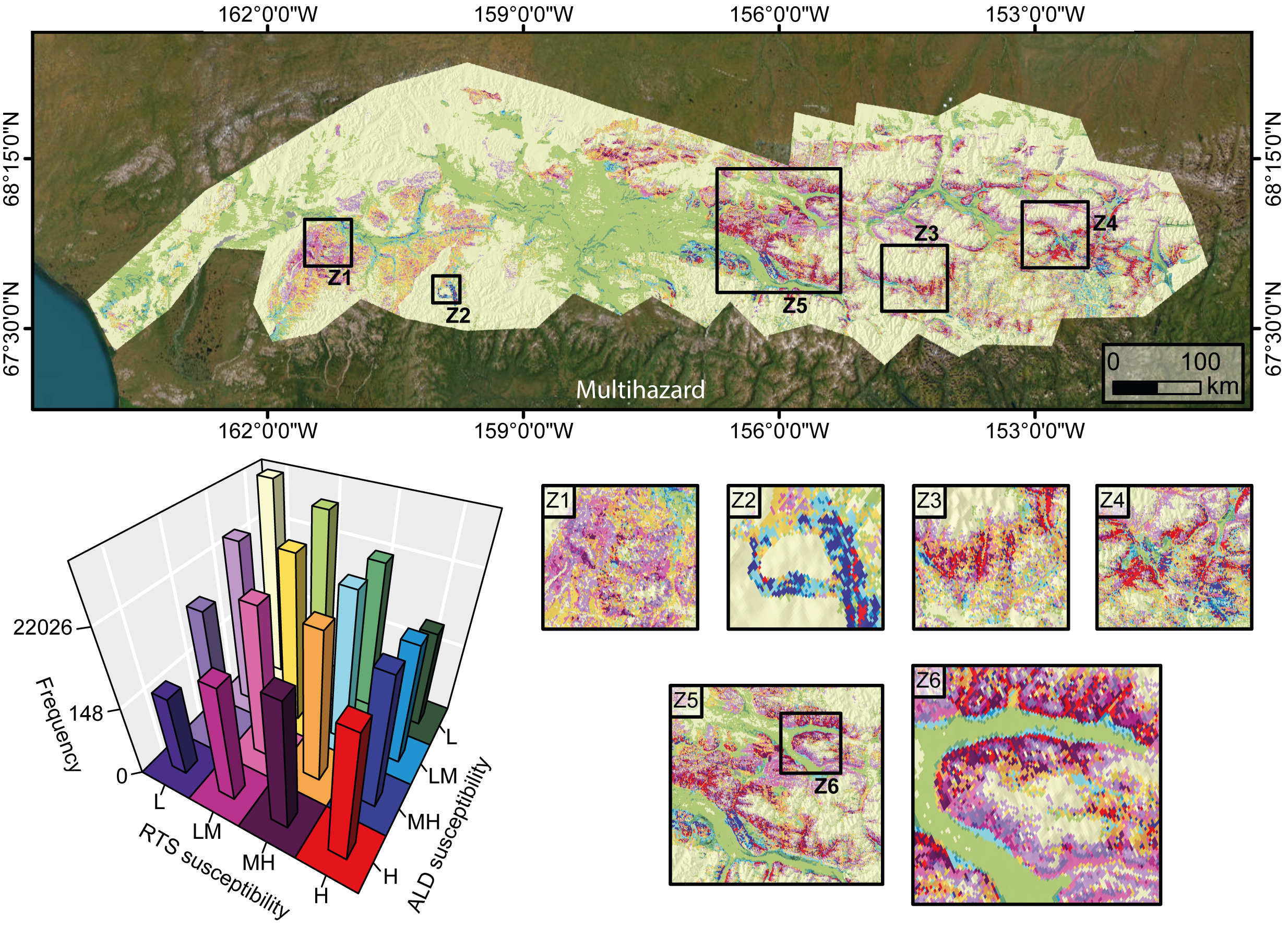
It represents the first multi-hazard susceptibility model of this kind ever to be trained and tested in Alaska.
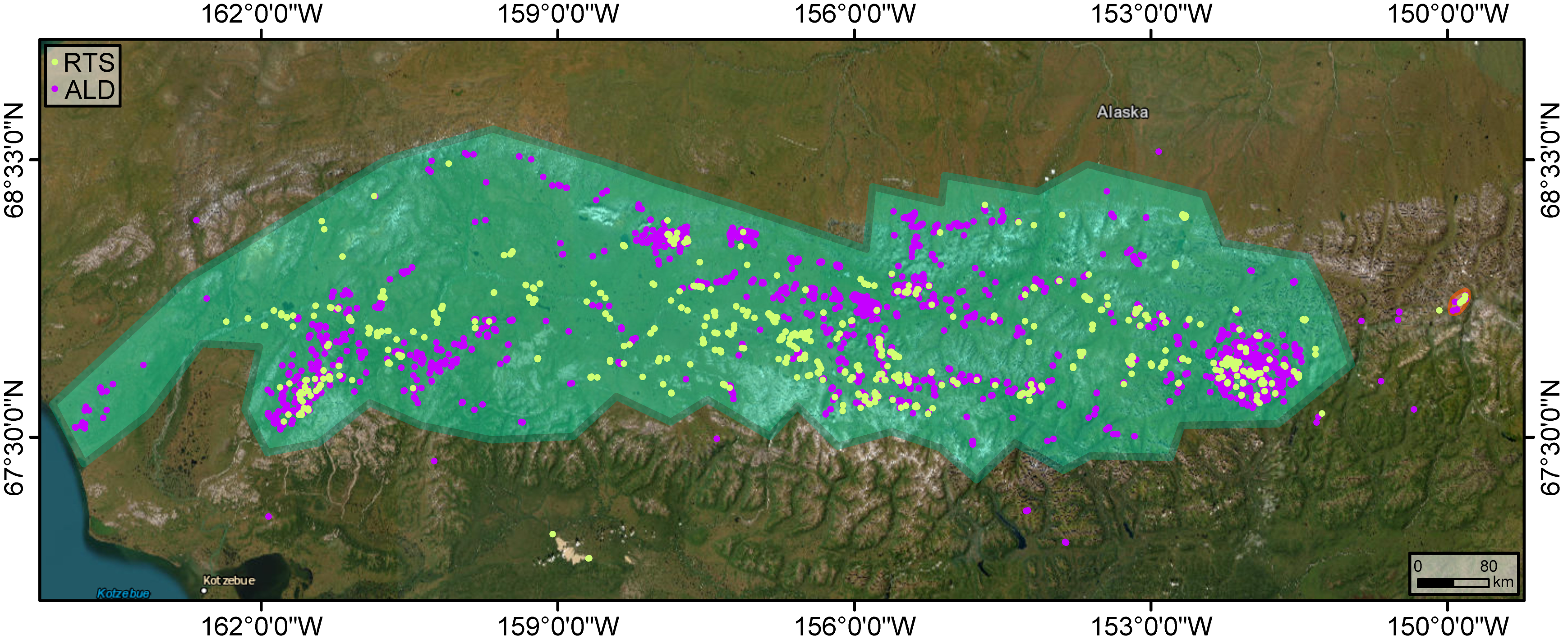
The model shows the areas where active layer detachments and retrogressive thaw slides are more likely to occur.
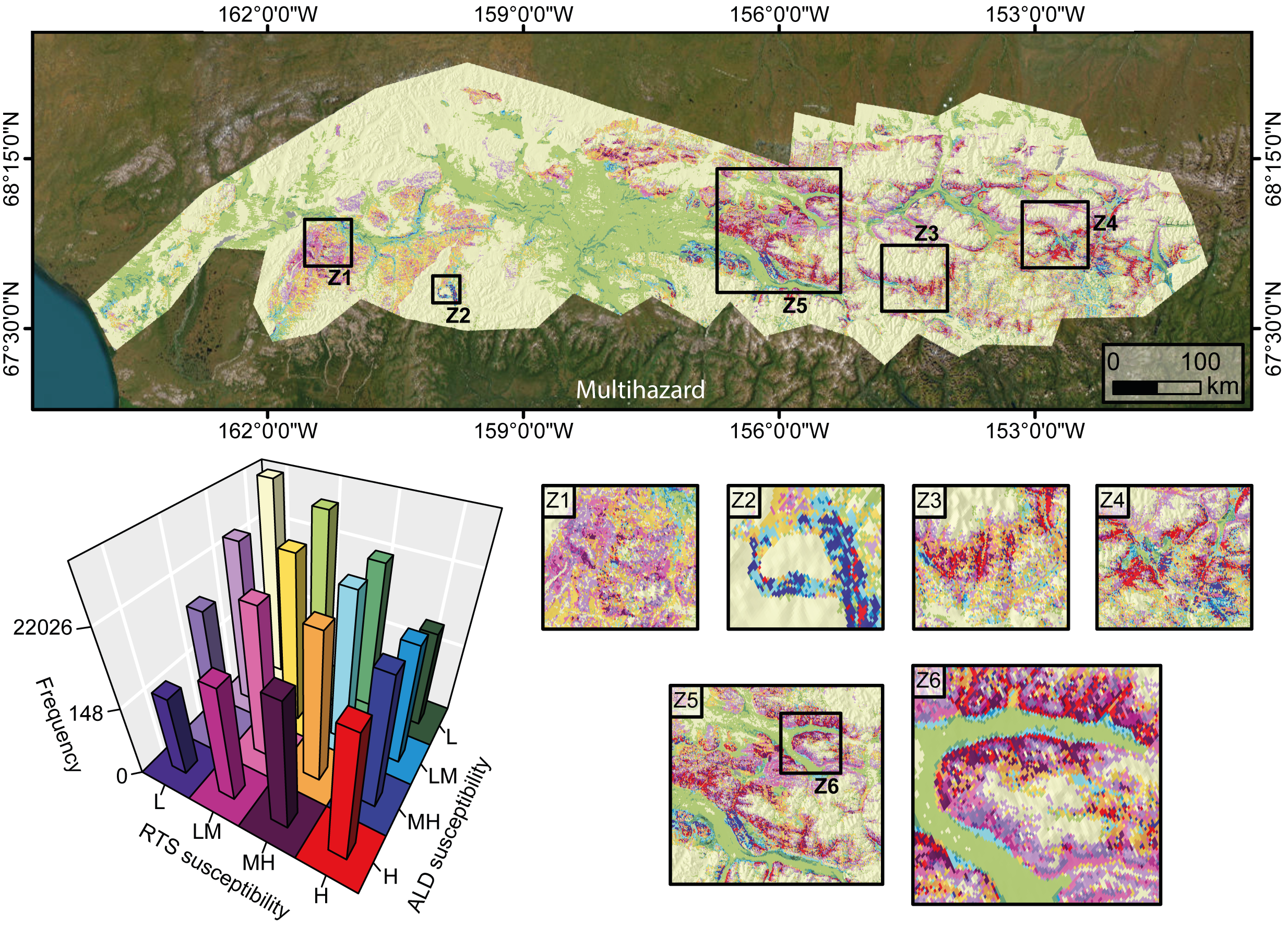
Due to the scarcity of infrastructure and the low population density, both the geoscientific community and the general public showed limited interest in understanding these remote permafrost landscapes. This is changing rapidly now that climate change and global warming are having a dramatic impact on these environments.
The researchers point out that improving our understanding of cryospheric processes in Alaska could inform future studies in other permafrost-rich regions, such as the Alps or the Tibetan Plateau, where similar changes are expected to occur in the near future.
Adapted by M. Ottevanger. This story is based on an interview with Dr. Letizia Elia. Click here to watch the original video 'Cryospheric Hazard' on the Geo Hero Youtube channel.
For a scientific paper on this topic by the same author, follow the link below:
Login and start learning!